
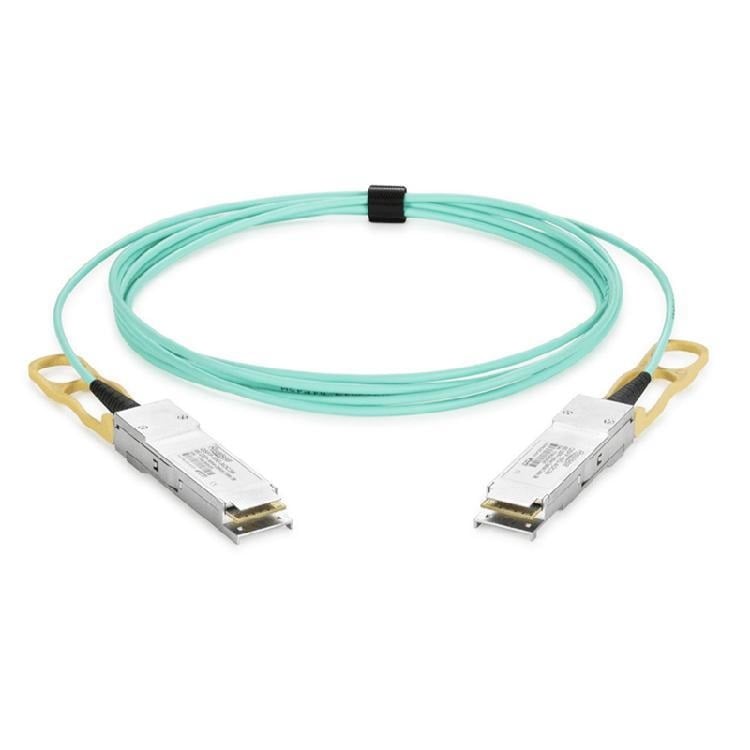
In the ever-evolving landscape of data centers and high-speed networking, connectivity solutions must keep pace with increasing bandwidth demands. One of the most effective solutions for high-speed, short- to medium-range connections is the QSFP28 active optical cable. For network professionals, understanding the capabilities, applications, and advantages of QSFP28 AOCs is essential for building robust, high-performance networks.
Understanding QSFP28 Active Optical Cables
The term QSFP28 stands for Quad Small Form-factor Pluggable 28, indicating a transceiver module capable of transmitting data at 28Gbps per lane, aggregating to 100Gbps across four lanes. When paired with active optical cable (AOC) technology, these cables provide a pre-terminated, high-performance solution that simplifies connectivity in dense networking environments.
Unlike passive copper cables, which rely on electrical signals, QSFP28 active optical cables use optical transceivers integrated within the cable ends. This design allows the transmission of data over longer distances with lower power consumption and reduced signal degradation, making them ideal for data center interconnects, enterprise networking, and high-performance computing clusters.
Key Advantages of QSFP28 Active Optical Cables
High-Speed Data Transmission
One of the primary advantages of a QSFP28 active optical cable is its ability to support 100Gbps transmission speeds. The four-lane architecture ensures that large amounts of data can move between switches, routers, and servers without bottlenecks. This speed is critical for data-intensive applications such as cloud computing, virtualization, and real-time analytics.
Extended Reach Compared to Copper
While copper-based connections like DACs (direct attach copper cables) are limited to short distances, AOCs can transmit signals over much longer distances. Typically, QSFP28 active optical cables can handle ranges from 1 meter up to 100 meters or more, depending on the quality of the optical fiber. This extended reach allows network designers to connect equipment across racks and even separate rooms without compromising performance.
Low Power Consumption
Because QSFP28 AOCs use optical signals, they require less electrical power than equivalent copper connections. This reduction in power usage is not only cost-effective but also contributes to lower heat generation within server racks. For large-scale data centers, this efficiency can translate into significant energy savings and reduced cooling requirements.
Simplified Installation
AOCs are pre-terminated, meaning network professionals can deploy them without the need for splicing, polishing, or complex termination processes. This plug-and-play design makes installation faster and reduces the risk of errors. For high-density environments where space and accessibility are limited, QSFP28 active optical cables offer a practical and reliable solution.
Signal Integrity and Reliability
Active optical cables maintain superior signal integrity compared to copper alternatives. They are less susceptible to electromagnetic interference (EMI), crosstalk, and signal attenuation, ensuring consistent performance even in electrically noisy environments. For mission-critical applications, this reliability is a major advantage.
Applications in Modern Networks
Data Center Interconnects
Data centers require fast, high-bandwidth connections between racks and server clusters. QSFP28 active optical cables provide the perfect solution for these short- to medium-range interconnects. Their high-speed performance and low latency ensure efficient data flow between storage, computing, and networking devices.
Enterprise Networking
In enterprise networks where scalability and flexibility are key, QSFP28 AOCs enable seamless connections between switches and core networking equipment. Their extended reach allows IT teams to organize equipment more efficiently, reducing clutter and simplifying network architecture.
High-Performance Computing
High-performance computing clusters often require hundreds of gigabits per second of interconnect bandwidth. QSFP28 AOCs deliver the performance and reliability needed for computational simulations, big data analysis, and AI workloads, ensuring minimal latency and maximum throughput.
Cloud and Virtualization Environments
Virtualized data centers and cloud infrastructures rely on fast, scalable connections to support multiple tenants and applications. QSFP28 AOCs allow these environments to maintain high-performance connectivity without the complexities of traditional fiber patching and management.
Choosing the Right QSFP28 Active Optical Cable
When selecting a QSFP28 active optical cable, network professionals should consider several key factors:
- Distance Requirements: Determine the maximum distance between devices. Short-range applications may use 1–10 meter cables, while longer inter-rack connections may require 50–100 meter options.
- Cable Type: QSFP28 AOCs typically come with either LC or MPO connectors, so ensure compatibility with your existing equipment.
- Power Efficiency: Evaluate the power consumption of the cable and its impact on overall data center energy usage.
- Vendor Reliability: Choosing reputable sources like Fiber-MART ensures high-quality cables with verified specifications and support for enterprise-grade environments.
Fiber-MART offers a comprehensive range of QSFP28 AOCs, catering to varying distances, connector types, and network requirements. Their products are widely recognized for reliability, compliance with industry standards, and competitive pricing.
Installation and Best Practices
Proper handling and installation of QSFP28 active optical cables are crucial to maintain performance and longevity:
- Avoid excessive bending or twisting of the cable, as optical fibers are sensitive to mechanical stress.
- Keep cable lengths organized using proper routing and management tools to reduce strain on connectors.
- Ensure connectors are clean before insertion to prevent signal degradation caused by dust or debris.
- Verify compatibility with network switches, routers, and transceivers before deployment to avoid potential errors or failures.
By following these best practices, network professionals can maximize the performance and durability of QSFP28 AOCs in their environments.
Future of QSFP28 Active Optical Cables
As data demands continue to grow, the role of QSFP28 active optical cables in modern networks will expand. Emerging technologies such as 400G Ethernet and AI-driven computing infrastructures are pushing the limits of connectivity, and QSFP28 AOCs provide a scalable bridge to future innovations.
Additionally, Fiber-MART continues to develop and supply advanced optical solutions that meet evolving standards, making it easier for network professionals to deploy high-speed, reliable networks without frequent upgrades.
Conclusion
For network professionals seeking high-performance, energy-efficient, and reliable connectivity, QSFP28 active optical cables are an essential component of modern data centers and enterprise networks. Their combination of speed, reach, and simplicity makes them ideal for a wide range of applications, from server interconnects to high-performance computing clusters.
By sourcing quality products from trusted vendors like Fiber-MART and following proper installation practices, IT teams can ensure robust network performance and future-proof their infrastructure to handle ever-growing data demands.