
Introduction
High-mix CNC production has become increasingly common in modern manufacturing. Instead of running the same part in large volumes for long periods of time, many shops now handle a wide variety of components in smaller batches. This shift creates new demands on equipment, programming, scheduling, and especially workholding.
In a high-mix environment, flexibility is no longer a minor advantage. It is a core requirement. The shop must be able to move quickly from one job to another without losing too much time in setup or sacrificing process stability. That is why flexible workholding has become such an important part of efficient CNC production.
A rigid, single-purpose setup may perform well for one job, but if it takes too much time to change over or cannot adapt to new part shapes, it becomes a limitation. Flexible workholding helps solve this problem by making setups easier to adjust, faster to repeat, and better suited to changing production needs.
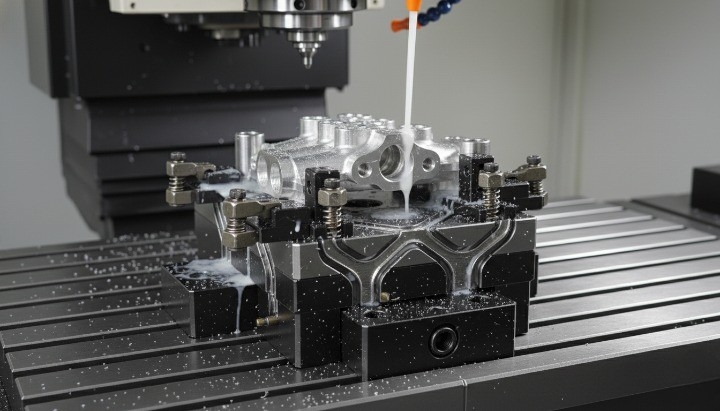
High-Mix Production Changes the Rules
Traditional production methods often relied on long runs. In that kind of environment, even a time-consuming setup could be justified because the same job would remain on the machine long enough to recover the effort. Today, many shops operate differently. They may run several part numbers in a single week, each with different dimensions, materials, and tolerance requirements.
This means the real challenge is not only machining the part well, but also preparing the machine quickly and consistently for whatever comes next. If every new job requires a complicated clamping process or extensive adjustment, machine utilization drops and labor costs rise.
High-mix production rewards systems that reduce setup burden. That is why workholding flexibility matters so much. It helps the shop respond to changing demand without turning every job change into a major interruption.
Faster Changeovers Create Real Value
One of the clearest benefits of flexible workholding is faster changeover. In many shops, setup time is one of the biggest hidden costs because it consumes both machine time and skilled labor. The machine is not cutting, but operators are still working. If this happens repeatedly throughout the day, total productivity falls even if cycle times remain efficient.
Flexible workholding reduces this problem by making setups easier to modify and repeat. A self centering vise or fixture system that can adapt to different part sizes or geometries without major rework allows operators to move more quickly between jobs. This does not only save time in one moment. It improves the rhythm of the entire production floor.
Over time, faster changeovers help shops take on more work, respond to urgent orders more easily, and maintain better schedule control.
Flexibility Supports More Than Convenience
Flexible workholding is often associated with convenience, but its value goes much deeper. It also supports consistency. In high-mix environments, variation is already part of daily production. Different materials, different part forms, and different machining strategies all create natural complexity. If the workholding system also adds instability or uncertainty, process control becomes much harder.
A flexible but well-designed setup allows the shop to adapt without losing repeatability. Operators can make necessary changes while still maintaining stable clamping, predictable part location, and reliable machining conditions. This balance is important. True flexibility is not just about moving faster. It is about adapting to change while preserving quality.
In that sense, flexible workholding is not the opposite of precision. It is one of the tools that helps precision survive in a changing production environment.
Better Support for a Wider Range of Parts
High-mix shops often work with parts that differ significantly from one another. One job may involve simple prismatic components, while the next may include thin walls, irregular shapes, or features that require careful access for the cutting tool. A limited workholding setup may handle one of these jobs well but struggle with the next.
Flexible workholding allows the shop to handle a broader part range more effectively. Instead of relying on completely new setups for every job, operators can adjust or reconfigure existing systems to fit different requirements. This supports smoother production flow and reduces the need for excessive fixture inventory.
It also gives the shop more confidence when accepting varied work. The ability to adapt quickly can become a competitive advantage, especially when customers expect both speed and precision.
Operators Need Practical, Repeatable Systems
In high-mix production, operator workload can increase quickly. Constant job changes require attention, accuracy, and process awareness. If the workholding system is difficult to adjust or inconsistent in performance, that workload becomes even heavier.
A flexible system should make the operator’s job easier, not more complicated. Good workholding helps reduce unnecessary trial-and-error, shortens preparation time, and creates more predictable setups even when part types change frequently. This leads to better process control and less daily friction on the shop floor.
It also helps shops manage training more effectively. When setups are easier to adapt and repeat, less time is lost to avoidable mistakes. This is valuable in any operation, but especially in shops where labor efficiency and process reliability are critical.
A Strong Foundation for Growth
Flexible workholding also supports long-term improvement. Shops that want to become faster, more standardized, or more automation-ready need systems that can respond to change without constant reinvention. If every new part requires a completely unique setup, growth becomes harder to manage.
By contrast, a flexible workholding strategy creates structure. It helps the shop build repeatable methods around changing production needs. This supports better documentation, more reliable planning, and a smoother path toward modular or scalable manufacturing.
Even if a shop is not fully automated, the ability to adapt efficiently is still a major strength. In many cases, flexible workholding helps bridge the gap between manual setup and more advanced production systems.
Conclusion
High-mix vise cnc production demands more than machining capability alone. It requires a process that can adapt quickly, maintain consistency, and support a wide range of part requirements without excessive setup waste. Flexible workholding plays a central role in making that possible.
By reducing changeover time, supporting repeatable setups, and making it easier to handle different jobs efficiently, flexible workholding helps shops stay productive in a fast-changing manufacturing environment. It improves not only convenience, but also quality, workflow stability, and long-term operational strength.
For CNC shops working with varied part types and constant schedule changes, flexibility in workholding is no longer optional. It is one of the keys to building a more efficient and competitive production process.